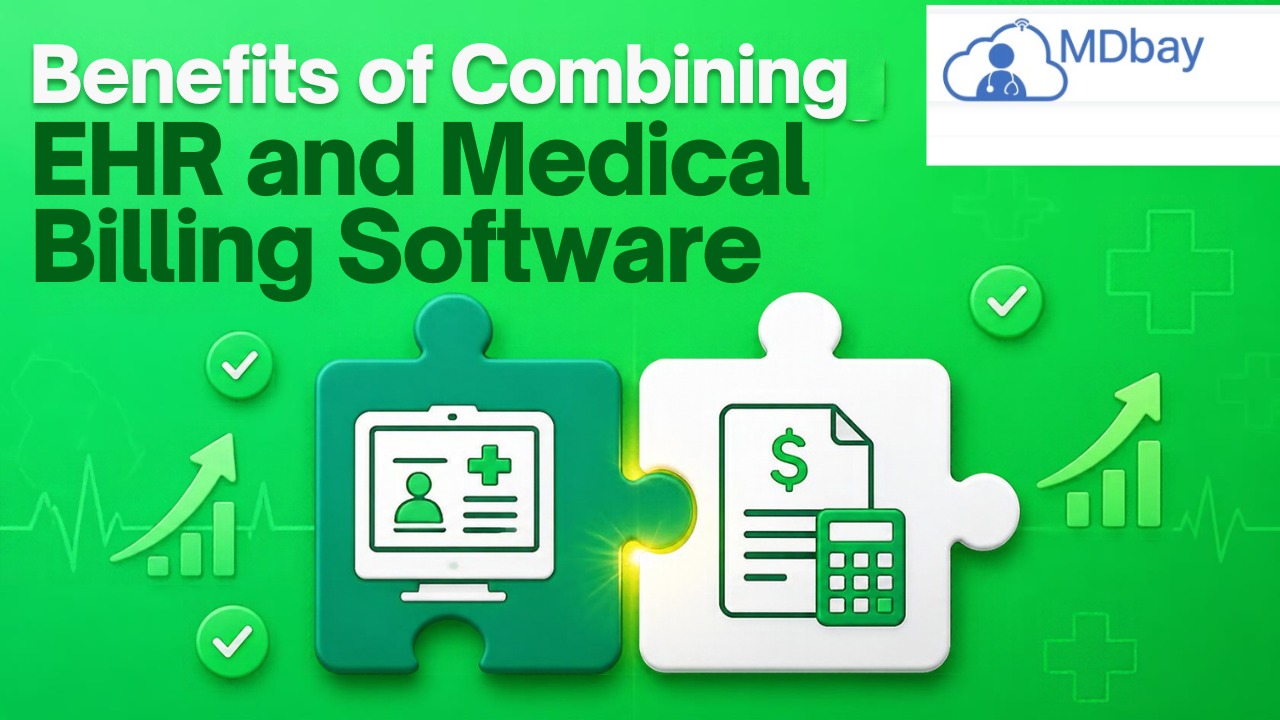
Benefits of Combining EHR and Medical Billing Software
Interested in streamlining your healthcare billing and records? Using EHR and billing software together gives providers a way to decrease time spent on administrative tasks, increase accuracy of records, and streamline financial processes. When the two systems are combined, healthcare providers can document and retrieve information quickly, and billing staff can process claims and payments more efficiently. This integration may also cut down on duplication of work.
What Is the EHR and Medical Billing Software?
EHR (Electronic Health Record) software refers to a real-time, patient-centred digital record that makes information available instantly and securely to those who need it, anytime, anywhere. It can contain a patient's medical history, diagnoses, medications, allergies, laboratory results, treatment plans, and other relevant clinical data. Only authorised medical professionals have access to these records. Practice management software specialises in the administrative aspects of your business, including scheduling patient appointments, managing billing workflows, and recording patient information.

Practice management software often integrates with your electronic health records (EHR) to streamline your daily workflow, save time and money, and help you serve your patients better. If these two systems can be linked, both clinical and administrative data can be shared across departments more easily. Hospital employees might not have to input the same patient data in two applications. This can give a connected workflow and promote more consistent data management within a healthcare organisation.
Understand EHR Software
Electronic Health Record (EHR) software stores information about a patient's health. EHR software keeps patient care and medical history and may even include diagnoses, allergies, lab results, and medications. Care teams can use these records to better understand a patient's history. This allows them to make a reasoned, calculated decision about potential treatments and can help them track patient progress over time.

Understand Medical Billing
Medical billing software allows healthcare teams to better handle their billing process. It can assist staff in creating bills and submitting claims to health insurance plans. Teams can also track bills for expected payments and record payments when they are received. Some software allows staff to create payment reminders and to observe the status of claims on insurance providers' systems.
Connect Both Systems
If EHR and billing systems are integrated, some important information may be transmitted from one team to another more easily. For example, staff might access visit notes to ensure the proper billing code is applied to a claim. This can eliminate duplicate data entry and may decrease errors. The precise connection will vary based on the specific systems and the way they are configured by the health care team.
Enhance Your Daily Productivity
Connected EHR and billing applications allow care and office staff to work together in one view. Care staff can document visit information, and billing staff use the necessary data for claims. Teams also might see fewer issues with missing data when a claim is ready to be submitted, reducing delays and repeated efforts. Proper setup and secure access rules remain a must for patient data.
Key Benefits of Combining EHR and Medical Billing Software
More Precise Patient Data
Patient information is important not just for delivering proper medical care but for billing too. Using disparate systems can cause staff to input patient names, insurance info, diagnoses, and services repeatedly. This increases the likelihood of misspelling, erroneous entries, and missing information. If you use billing software as part of your EHR or if you have a fully integrated solution, you can avoid the need to duplicate data entry, as the system can transfer information between connected software. For instance, patient demographic information can be available to the billing team if it has been entered during registration. This can be used to help staff handle data in a consistent way and limit time spent correcting needless errors. Nevertheless, clinicians are still encouraged to periodically examine records to ensure they are not void of information and are complete.
Faster Medical Billing Processes
The process of billing is often time-consuming, particularly for large clinics or practices. Employees may need to research multiple sources of information before an invoice is ready, or an insurance claim is filed. Integrated systems can streamline this process by integrating clinical documentation with billing. When a healthcare worker documents a service, additional details may enable a billing team to compile related charges more effectively. With billing occurring more quickly, they'll experience fewer administrative delays and will be able to more easily do the everyday work in their systems. Your employees can better spend their time cross-referencing and diagnosing claims, providing help to customers, and ensuring billing requests are answered.

Insurance Claim Errors
Insurance claims are often contingent upon the submission of correct patient demographics, proper procedure codes, documentation, and proper insurance information. If the information provided is not accurate or is lacking, the claim may be delayed or denied. One of the benefits of integrated healthcare software is that it also minimises some of these issues by maintaining accurate billing and clinical data seamlessly connected. Some programmes offer claim checks so missing data or errors are caught prior to the claim being submitted. This does not mean claims will be approved automatically. Each insurer has rules for coverage, documentation expectations, and billing procedures. A good system, however, can empower billing staff to flag potential problems sooner and handle claims more delicately.
Patient Care and Experience Improvement
Healthcare professionals require accurate data to comprehend patients' conditions and diagnose the right treatment. The EHR software provides authorized users with the ability to see the relevant past medical history, previous prescriptions, medications, allergies, and treatment history. With less time wasted on administrative procedures, doctors may be able to have more communication with patients, set appointments, and prepare for patient visits. An integrated bill may also assist in providing patients with a better experience by making it easier for staff to locate insurance and billing details. A more transparent bill could assist in helping staff respond to questions about charges. Healthcare alone cannot improve clinical results—it's the right patient information in the right place at the right time that enables more patient-centred care.
Enhanced workflow efficiency
Having to work across a variety of systems adds additional work to the daily operations of healthcare delivery. Staff would have to access different systems, cut and paste information into the other system, and then often call other departments to verify. Your EHR and billing software could link parts of this process. Properly integrated systems can make it simpler to manage clinical documentation, payment processing, claim filing, and tracking.
Easier Insurance Claim Tracking
Many companies find it difficult to track insurance claims since the information is often saved in multiple spreadsheets, emails, and separate software tools. Billing teams find it hard to determine what claims still need to be completed. A linked billing system can help get a broader picture of claim activity and the connected patient records. Software for billing may allow employees to access claim statuses, spot missing items, and document payer responses as part of a single process. This transparency enables staff to make more informed decisions about the next steps or proactively look into reasons for delays. It may also lead to improved patient and payer communications by providing the extra data needed. Monitoring claims on a regular basis is still beneficial, as integration doesn't have any influence over the speed at which an insurer will settle a claim.
Improved Money Handling
Financial management is a key aspect of managing a practice. Clinics should be aware of the revenue they are generating, the account balances they are owed, and the costs incurred while managing daily practice administration. There is this big suggestion for you to utilise clinical EHR and clinical billing software. This combination of software is capable of bringing clinical service details and financials together. It has the tendency to simply make it possible to check out payment activity as well as declined accounts. With more systematic records, managers can detect payment delays, examine revenue trends, and assess where billing practices might need a boost. Timely and precise financial reports assist in budget planning and resource allocation by a healthcare provider. The quality of the report is determined by the data entry, setup of your financial accounting software, and a review process.
Less Administrative Work
Administrative Personnel: Occasionally, insurance verification, registering a patient, processing appointments, patient questions, paying the patient, filing a claim, recording payments, and registering the patient all take place using different technology. Some of the workload can be alleviated by integrated healthcare software providing information across connected workflows. For example, some procedures like patient information transfer or updating the billing data may be less time-consuming. Decreasing redundant tasks can free up staff time to focus on functions that require human intervention, such as correcting problematic bills and working with patients to explain how their bills are calculated. Health organizations should still define clear procedures and periodically double-check any automated processes. This is to prevent any vital information from being missed.
Improved Communication Between Departments
Billing and clinical teams require reliable data from one another. A question from billing to the clinical team or an incomplete clinical record can cause delays in claim processing.
More Assistance for Expanding Healthcare Practices
When the practice expands, its patients, their scheduling, insurance claims, employees, and number of appointments can increase. The tools that once served a small practice may become cumbersome as administrative processes grow. Integrated EHR and medical billing software can offer a more unified basis for managing these expanding workloads. It can assist in eliminating duplicate efforts, structuring data, and increasing clarity among teams. Considerations for healthcare organizations include how many users it will support, available integrations, storage needs, reporting capabilities, and pricing. Selecting a system that will scale with the practice may mean there's no need to put in another significant software change down the line.
How Integrated Healthcare Software Works
Integrated healthcare software is a comprehensive workflow that allows clinical and administrative tasks to be easily linked. The workflow may be different in each system, but, in general, a typical workflow would look something like this.
Step 1: Patient Registration
When a patient arrives, his or her personal information, contact information, and insurance information are collected. The staff members input this information into the system. Errors can impact medical records, eligibility checks, and insurance claims. With a connected system, approved registration details may be accessible to both clinical and billing staff.
Step 2: Clinical Documentation
The doctor or clinician who is on an appointment writes down the related information in the EHR, like services, diagnosis, medication, the point of treatment, and symptoms. Full documentation. Continuity of care is achieved through complete documentation, which also might be necessary for billing. Healthcare providers, therefore, have a professional responsibility to verify that their documentation accurately reflects the care they provided.
Step 3: Charge Preparation
Once a service has been documented, the applicable information can be utilised to generate billing charges. The billing team will review the information and verify the services, codes, and all other applicable information. The amount of automation is dependent on the software. The staff review plays a role in ensuring there are no billing errors due to incorrect coding or gaps in documentation.
Step 4: Insurance Claim Submission
After the claim has been checked, the billing department submits the claim to the corresponding insurance payer. The software can aid in filing the necessary information and recognize some empty fields in your front office. Healthcare entities must adhere to payer guidelines and billing rules when submitting claims.
Step 5: Payment and Claim Monitoring
Once submitted, staff can track the responses from carriers and other providers and document the payments, modifications, or requests for more information. Unpaid or corrected claims can then be handled accordingly. Connected records can enable employees to follow the connection between the clinical service, submitted claim, and how it has been paid.
Step 6: Reporting and Review
And lastly, administrators will analyze financial and operational reports for trends and feedback to see what can be improved. These reports could include payments, claims, or reports of documents being filed incorrectly or missing.
What to Consider When Choosing an Integrated System
Choosing the right EHR and medical billing software isn't just about determining your costs. There are other factors to consider when selecting a new system. Consider your workflow, reporting, security needs, and upcoming goals.
Ease of Use
It should be simple for admin and clinical staff to grasp. Difficult screens and confusing instructions lead to increased training and new mistakes. Have vendors walk through typical activities, such as patient registration, clinical documentation, billing, and tracking claims. Conducting a live demo allows staff to assess whether the system meets their everyday needs.
Integration Capabilities
Not all software products integrate with others in the same way. Find out how your system transmits each to connected programmes: patient data, clinical documentation, billing codes, and payment information. Enquire whether the integration is part of the cost or an additional installation fee. Additionally, find out what occurs when a system is in use or updated.
Data Security and Privacy
Healthcare data has sensitive information and must be protected. You should check security features such as encryption, account permissions, audit logs, backup mechanisms, and account authentication. Access to information should be restricted based on workers' roles. Healthcare providers should take responsibility for verifying that their systems and operations are aligned with the privacy and security standards set forth by the governing jurisdiction.
Reporting Features
When reporting is a tool: Provide information to the organisation to monitor both the clinical and financial management of the organisation. Useful reports include the status of claims, remaining balances, trends in payments, and billing activities. Verify that you can have the reports customised and exported if needed. Make sure the reports are descriptive enough to allow for an educated decision to be made.
Training and Technical Assistance
A robust system alone isn't enough. Informed staff who are trained to use and review the system and understand how to correct errors and safeguard patient information are essential. Check with the vendor to see if they can provide onboarding, training resources, what the support hours are, and how to report a technical issue. Good support can be especially important in the early days of adopting a new platform.

Challenges of Integrating EHR and Medical Billing
While integration may facilitate such workflows, the implementation will require thoughtful planning. Being aware of typical implementation hurdles can help providers prepare for the change.
Data Migration Issues
Migration can be difficult when you're moving from a legacy system, particularly if there are gaps in data or if data is stored in different formats. Bad migration can result in duplication or critical data being left behind. Before finalising the migration, companies must assess current data, back up the information, perform a migration test, and validate sample entries.
Staff Training Requirements
The staff will need some time to get to grips with a different system and change the way they operate. If this is not managed, they could enter data in the wrong way or may not take full advantage of the new functionality. Offer hands-on training and be clear in your instructions to help staff gain the confidence they need to work methodically.
Integration Costs
Additional charges may be necessary for implementation, data transfer, custom connections, or technical support for certain solutions. All charges should be reviewed before contract execution. Providers should ask for an itemised list of the costs and ask which features are within this package.
Best Practice Tips for Successful Integration
Providers are able to increase the success of an integrated system by adopting a process for execution.
-
Before investing in software, look out for repetitive activities, frequent billing mistakes, and time-consuming bottlenecks.
-
Define your objectives: Determine whether the foremost priorities are quicker claims, more accurate data, improved reporting, or less administrative work.
-
Verify data quality: Fix incomplete or duplicated items before copying data.
-
Instruct staff: Offer specific training to clinical, billing, and administrative staff.
-
Test the integration: Check the data flows between systems before going live.
-
After implementation, analyse claim results and the time it takes to process, and gather data from team members.
-
Update procedures: Adapt procedures as requirements change due to software features, payer policies, or organisation needs.
-
All this will help a company find the problem early and ultimately make technology work for what you're doing on the ground.
Conclusion
A hybrid of EHR and medical billing software tools enables healthcare providers to link clinical documentation and patient records to associated billing functions. Streamlined data entry and organised clinical information, from building claims to keeping track of payments, is much easier with a combined system. But they can also lead to improved interdepartmental communication, more effective financial reports, and a more positive customer experience. The benefits can only be achieved if practices select the right software, set up the systems properly, ensure data integrity, safeguard patient information, and prepare staff. Health care providers will need to take some time to determine what their needs are before selecting a computer system. By taking time to plan, test, and re-evaluate, integrated healthcare software can become an important tool in an effective and well-managed healthcare clinic.
Frequently Asked Questions
1. What are the advantages of integrating EHR and medical billing software?
By integrating these systems, you can avoid having to duplicate data entry, accurately exchange information, create a unified billing process, enable claim tracking, and minimise the pain of audits. It can also facilitate better communication between administrative and clinical staff.
2. Can ITPPC software reduce claim denials?
Integrated healthcare software can identify missing information and some errors, but not all integrated software can help flag missing data and some errors to avoid claim denials. However, it will not ensure that all claims will be approved.
3. Can a small practice use integrated EHR and billing software?
Yes. Many products cater to the small clinic, the sole practitioner, and the multi-location health enterprise. The best fit will be dictated by the clinic's budget, speciality, volume of patients, hiring plans, and selected feature set.
4. Can EHR improve patient care?
It can assist patient care by improving the accessibility of relevant clinical information and some of the burdens of administration. However, improvements in outcomes are also dependent upon clinical judgement, quality of documentation, staff training, and quality of care.
5. Why does integrated software facilitate medical billing teams?
This can assist the billing team to access important patient and service data, generate claims, track payment activity, and flag data gaps. The functions will vary depending on the software and the level of integration.
5. What is the time frame for EHR and billing software integration?
The time to implement depends on the system, how much data has to be transferred, how complex their current workflow is, and how much training needs to be done. Simple implementations take less time; for a large organisation, a more comprehensive implementation plan is necessary.