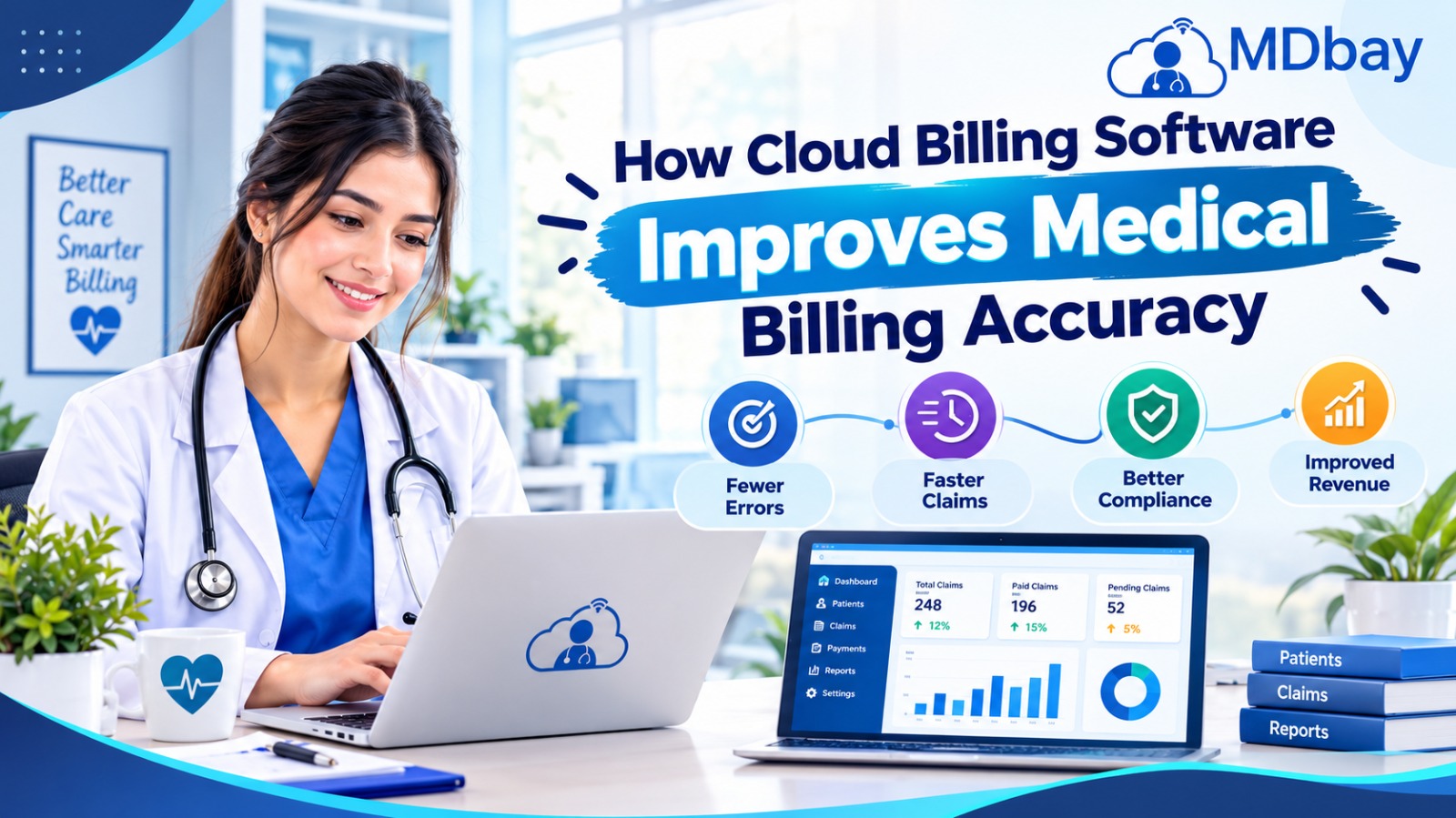
How Cloud Billing Software Improves Medical Billing Accuracy
Medical billing management is necessary for healthcare organisations looking for efficient insurance processing, quick reimbursements, and effective record-keeping. Cloud billing tools allow providers to streamline billing processes and spot errors. The healthcare industry's conventional billing operations, including entering data into applications, spreadsheets, paper documents, or disjointed systems, can hinder staff efforts to maintain consistency and data accuracy. Cloud applications can unify essential billing functions, providing the right users with a single source of information and built-in interfaces for examining billing.
What is Cloud Billing Software?
Cloud billing software is web-based software that helps providers to process billing. Electronic health records (EHRs) and practice management software may also be integrated into the platform to minimise entry of duplicate data. Having billing information in one place may allow staff to work with the same information. When information is logged or modified, other authorised users may be able to view that information based on the system's synchronisation and access rules.
The Importance of Accurate Medical Billing
Medical billing is not just about how much money a practice earns but also about the people receiving the services. Billing errors can result in refused insurance claims. denied reimbursements, or inaccurate patient billing statements. The failure to bill properly increases administrative costs too. Staff can spend time researching claims they didn't get paid for, fix the errors, contact insurance providers, and refile their documentation.

Save Time and Costs
Billing errors on repeated occasions can take a lot of the healthcare team's time to review what was rejected and fill in the missing information. They then have to contact insurers and send the same thing again. These additional tasks slow down everything else happening in the office. Correct billing procedures minimise repeat work so staff can work more efficiently.
Enhance Patient Confidence
Having transparent billing records makes it easier for patients to understand the expense of their care. They may be able to get a sense of what an insurance plan might cover and what they would need to be responsible for paying. Accurate bills can also clear up any questions about charges and unpaid balances and, when done well, can increase confidence in the practice.
Support Better Financial Control
The right billing makes it easier for a practice to see how much money it brings in and what claims are outstanding. The practice's team can identify where funds are received and what requires additional work. Though no program prevents all errors, it can ease the more consistent effort needed.
Decreases Human Entry Mistakes
Common billing errors include data entry mistakes. Employees might type in the wrong patient ID number, insurance number, date of service, or provider information. The more pieces of information that are being entered into more than one system, the higher the risk of billing errors. Details that get entered incorrectly early will continue through an automated process if they aren't corrected. Employees should check the key information and fix any errors at any point they occur.
Verifies Insurance Coverage Better
Insurance verification allows the provider to check on the coverage status and details of the patient's insurance. If the benefits are not accurate, a claim could be rejected or delayed. Some cloud billing software links to payer systems or eligibility verification systems to assist staff in verifying coverage prior to claim submission.
Facilitates More Reliable Medical Coding
Medical coding is the process of taking information about the diagnoses, procedures, and services from a patient's medical record and assigning standard codes to each. The system may flag information to review prior to a claim filing, depending on the system you use. These features may assist in support of accurate medical billing but do not substitute for professional coding decisions.

Coding should align with the documentation. Appropriate code sets, payer requirements, and any other guidelines. All places of work ought to make sure their employees are receiving the suitable training and the coding points are being reviewed often. Automated coding solutions should be double-checked before using them in a claim.
Identifies Missing or Incomplete Claim Information
Cloud billing software can also offer claim validation features that can catch some missing fields or errors prior to submission. This can give your staff the chance to correct errors before you have to resubmit with the payer. Certain systems are able to offer work queues that display the claims that require an action. This allows a billing team to prioritise what they need to sort through and concentrate on those that are not yet complete. Validation rules vary for each platform and payer. Staff needs to know what the system already verifies and what they need to verify manually.
Organizes Billing Information
If billing data exists in different spreadsheets, emails, paper files, and other software applications, customer service reps may have a hard time finding the latest information. Multiple data files can also lead to disparate claims. It also allows cloud billing software to consolidate all of your relevant billing history onto one platform.
Enhances Claim Scrubbing Before Submission
Claim scrubbing is the act of reviewing claims for any inconsistencies or errors before submitting the claim to the payer. The purpose of scrubbing is to catch anything that might get a claim rejected, denied, or delayed. The cloud billing software will validate the submission to ensure that it is complete, depending on the platform. It might validate coding combinations, patient information, or other field entries.
De-duplicate Claims and Billing Records
Duplicate claims or duplicate billing records can also cause confusion and extra work to clear up. This situation might occur when a staff person submits a claim a second time, double-enters data, or does not realize that a record exists. Some of the cloud billing providers offer tools to identify whether there may be duplicate claims or view the history of claim submissions. If such features are available, staff can verify if the claim has been submitted previously. A defined workflow is essential.
Enhances Payment Posting Accuracy
The act of posting payments received from payers and/or patients and all adjustments. Some solutions can even automate this process if the necessary information is available. Exceptions should still be screened even when the posting process is automated. An exception occurs when there is a discrepancy in the payment amount as compared to the expected payment amount; these may need to be analyzed for contractual adjustments, denials, deductibles, copays, etc. Having accurate records of payments allows practices to have a better picture of where they stand financially and be more effective when it comes to discussions about debts.

Gives Reporting to Track Billing Mistakes
Billing reports are valuable tools that can show providers where errors are being made and if the fix is effective. Without regular reporting, recurring issues can be buried in the details of individual claims.
-
Claim denial rate
-
First-pass claim acceptance rate
-
Number of corrected claims
-
Time to address billing mistakes
-
Number of outstanding claims
Payment posting discrepancies
The data reported will, of course, vary depending on the software. Healthcare providers should select a programme that offers the report data that matters rather than metrics that aren't going to be practical for them.
Careful Coding Review:
Ensure the use of current coding standards and payer specifications. Clarify vague or inconsistent coding information before submission.
Use Blaim Validation Tools:
Set up the checks available and look at the warnings that the system raises.
Educate billing Staff:
Conduct ongoing training on software features, coding updates, payer rules, and frequent errors.
Monitor Denial Trends:
Review denied and rejected claims to identify common issues and streamline processes.
Manage Access Rights:
Grant permissions based on job function and make adjustments as appropriate when roles change.
Conclusion
Some healthcare providers prefer accurate medical billing so they can keep detailed records, avoid wasted administrative effort, and keep reimbursement under control. Mistakes in patient details, coding, claims, or payment posting can lead to delays and additional work for billing staff. If you have cloud billing software, your revenue cycle can be more accurate by consolidating data, minimizing duplicate information, flagging incomplete claim data, following payments, and generating reports about common mistakes. Connecting with other healthcare systems can also make it easier for staff to use more uniform data. But software on its own cannot ensure perfect billing. Healthcare organisations need to keep thorough records, adhere to the coding and payer guidelines, provide training to personnel, and do regular audits of payments and claims. By using the right technology, having clear procedures, and implementing constant monitoring, providers can establish a more robust billing workflow and enhance the quality of their medical billing process.
Frequently Asked Questions
Can cloud billing software help reduce claim denials?
It could assist in lowering avoidable denials by flagging missing information, fulfilling eligibility requirements, and streamlining claim audits. Yet, it cannot promise approval, as a payer's discretion is primarily based on coverage, necessity, documentation, and additional criteria.
Should small medical practices consider cloud billing software?
Yes, there are billing systems that cater to small practices with features that include payment tracking, claim management, and reporting. Practices should evaluate pricing, functionality, security, and integration when selecting a system.
What should clinicians look for?
Some features worth considering are claim validation, insurance eligibility checks, coding assistance, payment posting, denial management, financial reporting, user permissions, and the ability to connect with your other health care systems.