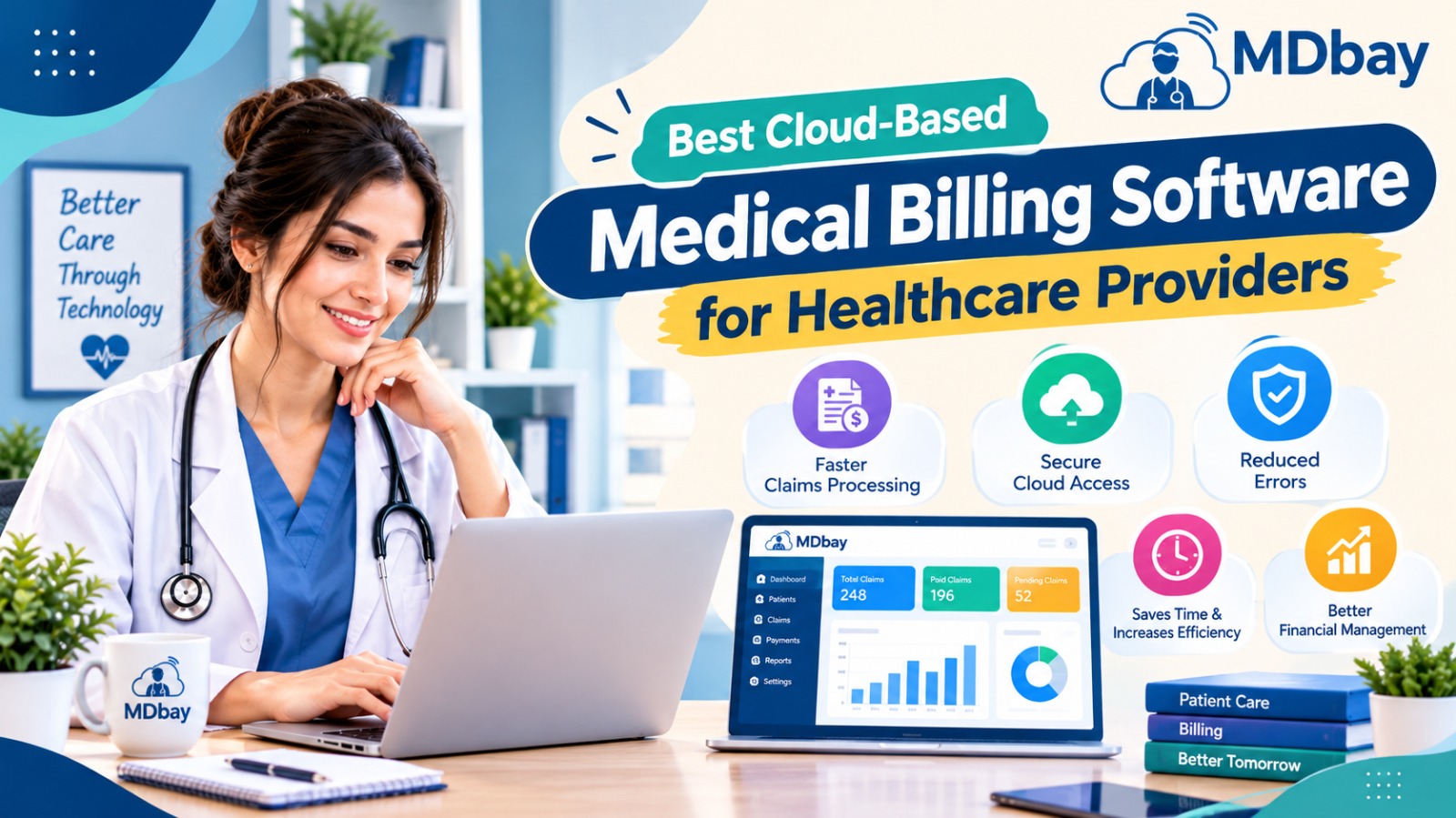
Best Cloud-Based Medical Billing Software for Healthcare Providers
Billing and revenue cycle management is an essential task that all healthcare organisations must perform. Whether your practice uses manual billing methods or computerised billing software, there will be a time when you have to handle insurance claims, accounts receivable, patient payments, and billing management. Utilising cloud-based medical billing software can be a great way to do so. A good billing system can make a tremendous difference for your practice by streamlining the financial information, eliminating duplicate effort, and enhancing the process of claims handling. Regardless of the size, a single office or a large health system, contemporary medical billing software solutions provide the necessary features and functions for billing, submissions, collection, and reporting. As a general guideline, you should consider the size of the practice, billing needs, existing infrastructure, level of security required, and budget. Let's look at the main features of software to make it easier to compare what options are out there.
What is Cloud-Based Medical Billing Software ?
Cloud medical billing software is a web-based solution that enables providers to perform billing tasks without using installed billing software on their desktop computer at the office. Authorised users can access it via the internet, depending on what access the provider provides and the needs of the system. The billing service may facilitate patient invoicing, insurance billing, and payments and reimbursement tracking and reporting. It might even integrate with EHRs, practice management solutions, and clearinghouses to enable file sharing. As the data is stored on a centralised system, the staff members might be able to view the updated billing data from other authorised sites. This could benefit healthcare organisations with several providers, billing representatives, and an administration department.
Billing Online Access
Medical billing software hosted on the cloud is a web service used by the healthcare team. It makes it easy to process bills and claims outside the traditional office computer. The accounts are linked to web logins, and the access levels depend on the device's role and system regulations.
Manage Daily Billing Tasks
When you use these tools, staff can complete lots of important billing processes with a single system. They can generate patient bills and submit claims to payers. Staff can also monitor payments and verify the status of claims. This makes daily tasks easier to manage and makes problems easier to detect.
Connect Health Care Tools
Third-party cloud billing programmes can connect to the EHRs and office work systems. They might also connect to claim clearinghouses to exchange necessary information. These connections may reduce redundant data entries. They may also help ensure that the patient and billing information stay synchronised.
Store and Secure Data
Cloud systems store data on remote computers accessed through the Internet. A vendor might run updates or back up data for you. Having clear rules about who can access important records can protect the information. The health team should check the guidelines around data security and privacy before picking the programme.
Why Healthcare Providers Need Modern Medical Billing Solutions
Medical billing consists of a collection of related activities such as confirming patient details, checking insurance coverage, submitting claims, following up on billing payments, and appealing rejections. Performing this process manually, or with isolated systems, can result in excessive staff time spent on claims correction and collection. Modern medical billing solutions can help organize these activities within a more consistent workflow.

Automated checks may identify missing information before claims are submitted, while claim tracking tools help staff monitor progress and identify issues that require attention. A well-selected platform may also improve communication between clinical and administrative teams. When relevant billing information is available in one system, staff can spend less time searching through separate records and more time resolving financial issues.
Key Features of Closynchronised.d Medical Billing Software
HCPs need to assess the features to meet the needs of the practice. There will be several different functions for various platforms to review.
Insurance Eligibility Verification
Insurance eligibility tools give staff a way to verify what coverage the patient has and what benefits may apply prior to an appointment or procedure. Verification of eligibility prior to a procedure or appointment can help prevent billing surprises and can provide more clarity. The verification information returned is affected by the payer of the insurance, the integrations with the software, and what the payer's systems return.
Reporting and Revenue Cycle Management
Reporting tools can show data on claims, payments, balances due, denials, and reimbursement trends. Practice managers can learn where billing is becoming inefficient. The revenue cycle management capabilities integrate numerous financial processes, including the timely registration of patients, transmission of claims to payers, collection of monies owed, and customer account management.
Benefits of Cloud-Based Medical Billing Software
When adopted and configured correctly, cloud systems may offer multiple operational advantages.
Enhanced accessibility:
Authorized users can view billing data on approved devices and at authorized locations, based on the platform's access controls and policies.

Less administrative work:
Automation and single records can cut down on the amount of repetition, but review by staff is still essential for billing purposes. With tracking tools, teams can keep track of claim status, flag jobs that still require attention, and easily maintain an up-to-date list of open claims.
More Organized money management:
Centralised information can make it easier to review payments, outstanding balances, and billing reports.
Cloud-Based vs. Traditional Medical Billing Software
|
Feature |
Cloud-Based Software |
Legacy On-Premises Software |
|
Access |
Accessible remotely by authorized users. |
Usually accessed through a local network or configured remote access. |
|
Maintenance |
Usually managed by the authorisedendor. |
Managed by internal or outsourced IT support. |
|
Updates |
Updates are provided through the hosted service. |
Updates may require manual installation. |
|
Initial Infrastructure |
Requires less local server infrastructure. |
May require compatible local servers and infrastructure. |
|
Pricing |
Usually based on a subscription model. |
May involve licensing fees, maintenance costs, or other pricing models. |
Challenges To Look Out For When Using Medical Billing Software
Data migration:
There will be a need to migrate the patient and billing data from the current system. The migration process should be tested, and the data should be cleaned up before and after the migration.
Staff training:
Staff should be trained on how to use the software and on a standard billing workflow. They should learn about standard tasks, error correction procedures, privacy practices, and claims follow-up.
Changes to workflows:
New software could modify what information flows where between clinical, admin, and billing. Establish responsibilities to avoid holdups and confusion.
Integration issues:

Data may not be shared between systems if integrations are not set up properly or are not complete. Testing and vendor support are critical during implementation.
Temporary disruptions:
Transitioning to a different platform may impact ordinary operations if implementation is hasty. A defined implementation timeline, backup processes, and a plan to address unfiled claims can help minimise disruption.
Conclusion
The right cloud-based medical billing software can streamline billing tasks, track insurance claims, oversee payments, and offer greater insight into a practice's revenue cycle. The right platform can also minimise the amount of repetitive administrative work and enable billing teams to catch errors earlier. But more features aren't always the best features. When deciding between different healthcare solutions, providers should focus on ease of use, integrations, security controls, transparency in pricing, reporting functions, and customer service. Healthcare organisations can determine how well their needs match by evaluating their needs and evaluating software through a demonstration. They can then choose medical billing software that effectively integrates into their workflow to consistently realise their objectives. In addition, regular reviews and training of your staff will help you get the most out of your process.
FAQs
What is cloud medical billing software?
Cloud medical billing software is a web-based platform designed to aid medical practices and individual providers in their processes, such as insurance claims, patient billing, payment processing, and financial reporting. Only authorised users can perform cloud medical billing functions.
Is claim denial a weakness of medical billing software?
Others include components to detect incomplete data, monitor denied claims, and provide denial management. While they may prevent avoidable errors, there is no assurance that the claim will be approved. Fee managers rely on payer rules, documentation, eligibility, and other factors for approvals.
How secure is medical billing software in the cloud?
Security varies by vendor and configuration. Review encryption, access controls, authentication, audit logging, backup policies, incident response, and compliance obligations before selecting a platform.
What is the cost of cloud medical billing software?
Depending on the vendor, features, number of providers, volume of claims, implementation needs, and support plan, the costs differ. Vendors must ask for a complete quote, including potential extra charges.