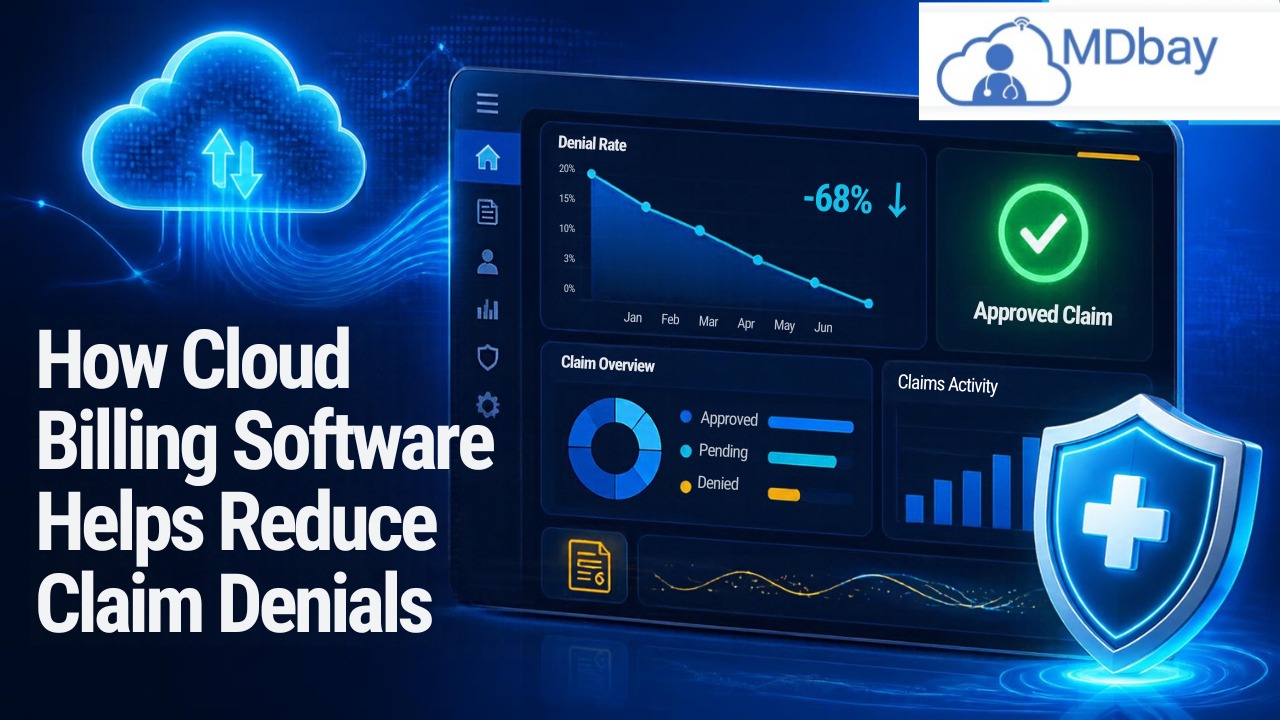
How Cloud Billing Software Helps Reduce Claim Denials
Cloud billing software assists healthcare facilities in processing medical claims more efficiently. It minimises errors in billing processes, maintains files in an ordered manner, and monitors claims before they are sent to insurers. These modules help teams keep better track of these details. The modules can suggest areas where information is missing, help insurance processes, and tell providers about the status of claims. All of these features help improve the billing process and cut down on preventable mistakes.
What Are Medical Claim Denials?
The insurance company will deny a claim (or part of a claim) for medical services it doesn't want to cover. Typically, the reason for the denial is noted on the claim or explanation of benefits. A denial is not the same as a "delayed" payment. A delay in billing indicates that it could still be in the approval process. A denial may require other actions before payment can be issued. On a broad scale, claim denials impact clinics of all types and sizes.

Understand Claim Denials
A medical claim denial is when an insurance company denies all or part of a claim. The insurer will state a reason for the denial, such as insufficient documentation or missing data. The physician's office staff must analyze the reason and determine how to respond. Sometimes staff may need to correct and resubmit a claim.
Denials and Delays
A claim that is not paid is not the same as a late one. The insurance firm may have a little more time to verify the claim. The insurer needs time to verify the data or look at information about the care. A claim that is denied requires further activity before it can be paid out.
Effects on Health Care
Clean claim denials can impact clinics or hospitals of any size. They may require additional time and effort from billing staff and lead to late revenues for the practice. Employees may need to review documents and contact the insurance company to identify the reason. A significant number of denied claims can also make it more difficult to budget for income. A clean billing process can enable teams to identify errors sooner.
Common Reasons for Medical Claim Denials
There are several common reasons why your medical claims are rejected. Certain issues are associated with incorrect data entry on the part of the patient. Other issues may relate to insurance policies or lack of proper documentation.
Common causes include:
-
Incorrect patient information
-
Missing insurance details
-
Expired insurance coverage
-
Incorrect medical codes
-
Missing medical records
-
Duplicate claim submissions
How Cloud Billing Software Helps Reduce Medical Claim Denials
Cloud billing software provides tools that billing teams can use to analyze claims and handle data. It can help employees flag issues before claims are filed. Here are some features that can assist in helping make the billings more accurate.

Identifies Missing Information
It has happened many times that the claim did not have the correct insurance number or patient information. Even a minor error in the input can cause delays. If so, the system can inform staff that key details are not yet entered. This enables staff to revisit and correct the record. For instance, a patient's date of birth might be entered in error. The programme will usually catch this discrepancy as you review the bill. Fixing it prior to submitting the claim will help prevent an unnecessary denial. Alert: Staff need to carefully review alerts. There may be some errors the automated process will not pick up.
Improves Insurance Eligibility Verification
Insurance plans are subject to change. A patient's insurance coverage can end, or a patient's insurance plan can change. Certain services may require further prior approval. Insurance eligibility tools can be integrated with your cloud billing software.
Supports Accurate Medical Coding
Insurers use this coding information to submit claims. A claim can be denied if codes are inaccurate or missing. Some cloud-billing systems offer coding assistance and claim validation. They can identify if any codes are missing or flag certain discrepancies. These can alert the staff to go over the claim before submitting. For example, a procedure code may not be consistent with the documentation in the medical record. The staff can compare the claim to the documentation and make corrections. Our software is not meant to take the place of being a programmer.
Identifies Potentially Duplicate Claims
You have duplicate claims that are submitted by staff members submitting the same service more than once. This might be where a claim was submitted twice, or there was some confusion regarding the status of a claim. Certain types of billing systems may catch duplicate submissions. Staff can verify the patient, service, date, and claim information before submitting. This helps eliminate multiple submissions that might lead to processing issues. It can also help cut down the time that has to be spent researching billing mistakes. Not all claims that are alike are duplicates. Staff should refer to each alert before removing or changing a claim.
Provides Clear Claim Tracking
Cloud billing software may show claim status on one screen. It helps staff find claims to follow up on. It can also let you find a claim for which you want to confirm whether it is processed. This allows clinics to act on issues more quickly. Staff can monitor claims as they're awaiting processing and reach out to the appropriate payer if needed. Additionally, the same clean tracking process can lead to improved communication among members of the billing team. All team members will have access to accurate claim data.
Assists Staff in Correcting Claim Errors
Staff should know the cause of the denial—whether it's because they need to fix patient information, add missing documentation, update the codes, etc. The cloud billing application maintains claim information. This assists the personnel in checking the initial bill and discovering the pertinent files. Some provide additional support, such as denial notes, and include contact details. This information can help staff determine the next step. They could amend and resubmit the claim, or if the claim is disputed, the claim may need to be appealed with the insurer. Each denial should be considered carefully. Submitting the same false information over and over will only cause delay.
Makes Denial Reports Easier to Review
A clinic might encounter the same kind of denial multiple times. For instance, you could find that many claims were rejected due to not having authorizations. This could be a sign of a bottleneck in the billing process. The Claim Results report is another report that a cloud billing solution can offer. This can be used by your staff to determine why a claim was rejected. It can also be used to see which areas need more focus. The manager looks at the results with their team. They might go back and do more training with their staff. Or they might change how they do a review. Logging in to your account periodically is also one way to help your office and help out. This will enable your practice to concentrate on problems that keep coming rather than fix each claim on its own.
Improves Communication Between Staff
Medical billing is a team effort. Customer service reps gather patient demographics. Medical professionals record patient care. Billing specialists process claims. If information is scattered in multiple files, errors can occur. Workers can apply old information or fail to notice relevant updates. Cloud billing software may allow authorized team members to access shared data. This can increase collaboration and eliminate redundant manual communication. Limits on access to information will still be needed. Clinics need to restrict what their staff can access. Patients' details need to be protected.

Common Claim Denial Problems and Software Solutions
The table below details ways cloud billing software may alleviate typical billing issues.
|
Common Problem |
How Software Helps |
Key Benefit |
|
Missing Patient Details |
Flags incomplete fields |
Reduces errors |
|
Incorrect Medical Codes |
Supports coding checks |
Improves accuracy |
|
Expired Insurance |
Verifies eligibility |
Prevents claim issues |
|
Missing Documents |
Organises claim records |
Speeds up processing |
|
Duplicate Submissions |
Flags duplicate claims |
Avoids repeated submissions |
Benefits of Reducing Medical Claim Denials
Avoiding these types of denials may alleviate some of the burden providers encounter around billing. A minimized amount of time is spent on corrections and administrative callbacks.
|
Benefit |
Why It Matters |
|
Faster Claim Processing |
Reduces delays in submitting and processing claims. |
|
Less Repeated Work |
Minimizes duplicate tasks and unnecessary corrections. |
|
Better Cash Flow |
Supports timely payments and reimbursements. |
|
Improved Record Accuracy |
Keeps billing information accurate and consistent. |
|
Clearer Reporting |
Helps identify recurring billing issues and trends. |
|
Better Team Coordination |
Keeps claims data consistent across billing teams. |
|
More Efficient Workflows |
Streamlines daily tasks and improves overall productivity. |
Verify Patient Information
Staff should verify the following patient details: name, date of birth, insurance information, and other necessary data. Staff should make updates if data change. Accurate data ensures there are no claim mismatch errors while processing and reporting. Accurate data can increase the integrity of the billing records.
Look for the Following Features:
Fact check: Flags missing or inconsistent content.
-
Authorization and eligibility verification: Facilitates checking of insurance benefits.
-
Coding assistance: Assists employees in reviewing coding information.
-
Claim tracking: Displays where the claims are in the system.
-
Denial reporting: Reduces not explained denials.
-
Billing management: Maintains the record of the relevant documents.
-
Electronic health record integration: Compatible with appropriate EHR systems.
Things to Know When Using Cloud Billing Software
Internet Access
Cloud systems need an internet connection. A bad or slow connection can impact your everyday work. Take a look at the internet in the clinic and alternatives for backup.
Staff Training
It takes employees a while to get the hang of a new system. Without the right training, they may use the wrong procedures or miss features altogether. Claim writing, error checking, reporting, and security.
Software Costs
Cloud billing systems can have a fee that is paid every month or year. The additional services may be included in this fee. Providers could evaluate the pricing along with the functionalities they demand. They need not pay for the features that don't fit into their workflow.

Conclusion
The cloud billing software assists healthcare service providers in billing claims and limiting unnecessary denials. It checks and verifies data, assists in the insurance verification process, reviews coding, and tracks the claims. It can assist the team in finding out repetitive mistakes in denial reports. Selecting the right software is just the beginning. At the same time, clinics need to educate employees, check for information accuracy, and put claims through additional review before sending them. Continuous monitoring allows teams to identify issues and make adjustments. Establishing a billing process within the software and staff can help healthcare services to create more efficient claims. This can lessen duplication of work and allow billing to be done more consistently.
Frequently Asked Questions
How Does Claim Tracking Benefit Healthcare Providers?
Claim tracking indicates if any claims are pending, processed, or denied. It assists staff in locating claims requiring follow-up and minimizes the risk of missing significant tasks.
After a Claim Is Denied?
Staff should look at the denial reason and review the original claim. If the error was on your end, staff can make corrections or fill in missing information and can also follow the insurer's appeal process if applicable.
Ease of Use of Cloud Billing Software:
Usefulness is variable and will depend on the system and user's experience. Short training and a simple interface will assist with daily operations. Clinics should trial a product before implementation.
Is Cloud Billing Software Faster with Payments?
It could be beneficial in decreasing delays due to missing information and unnecessary errors. However, true payment times are still determined by the insurance company, what is needed for the claim, and how the provider bills.