Cloud Medical Billing Software vs. Traditional Billing Systems
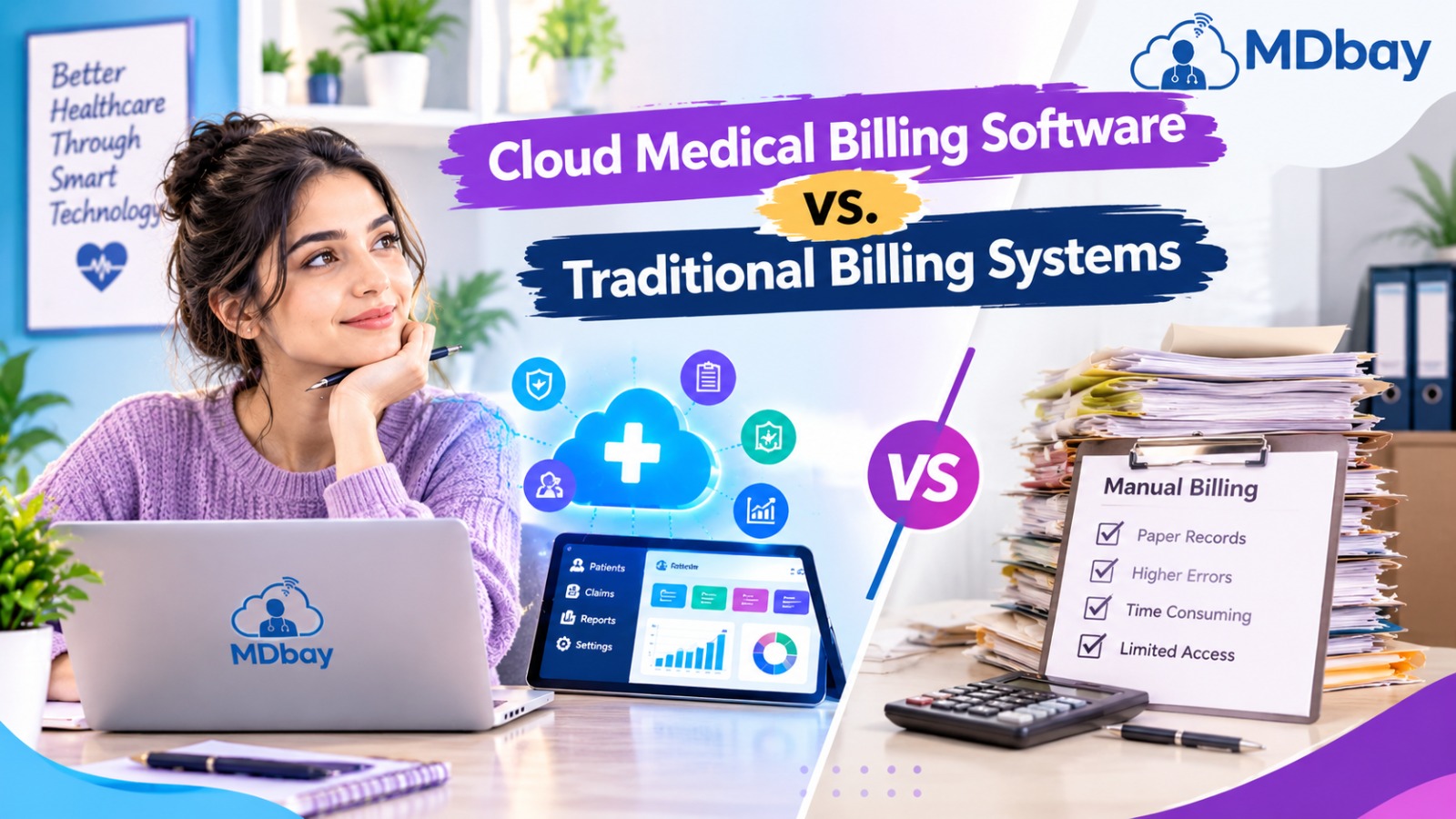
Medical billing is a significant component of healthcare management. It ensures that hospitals and clinics keep track of their patients' bills and insurance coverage. An efficient billing process minimises mistakes and can save time. Many modern providers now use digital devices in their practices, but some prefer to keep using manual programs for their day-to-day operations. Both traditional and cloud medical billing software have advantages and disadvantages. Recognising the strengths and weaknesses of each model can help providers and billing services choose the most appropriate options based on their budget, security, patient accessibility, and customer maintenance needs.
Medical Billing Systems Explained
Medical billing software manages your claims and payments. An online platform is a type of medical billing software that runs billing information over cloud software.

Cloud Medical Billing Software
This software provides access to the billing data to authorised personnel through the internet. It can be integrated with claim tracking, reporting, and payment processing features.
Conventional Medical Billing Software
Many medical billing practices and systems utilise locally installed software. Office servers may be used for storage of critical records. Locally installed solutions may also provide for direct management of the local infrastructure.
Data Accessibility
Staff can access information from remote locations on cloud platforms. Users of a conventional system need to log on to an office network. Remote access depends on your software.
Software Maintenance
The cloud vendor handles software updates and technical enhancements. Conventional systems could require updates as well as regional IT support. The overall upkeep requirements can differ depending on the software you decide to use.
System Flexibility
Cloud software allows you to increase users and locations easily. On-premise systems require extra hardware or licences to scale out, but either option can scale out with proper management.
Advantages of Cloud-Based Medical Billing Software
The software allows you to work remotely and access your billing records in the cloud. Employees can check claims and stay up-to-date on payments without being in one place. Most programmes include auto-updates as well as insightful reporting capabilities.
Online software can eliminate the need for on-site servers. This can help small practices eliminate some upfront hardware costs. Your billing team can also utilise online tools for collaborative workflows. Just ensure you have a solid internet connection.
Key Features to Compare
When comparing cloud medical billing software vs. traditional billing organisations, they should review the features that matter most to their daily work.
-
Accessibility: Remote data access
-
Security: Data protection tools
-
Cost: Setup and ongoing fees
-
Maintenance: Updates and technical support
-
Automation: Claim processing tools
-
Integration: Connected healthcare software
-
Scalability: Support for future growth
These features can help healthcare providers identify the most suitable system. They should compare actual software capabilities instead of assuming that every cloud or traditional solution offers the same functions.
Security and Patient Privacy
Patient privacy is essential for every healthcare organisation. Billing systems contain personal details, insurance information, and payment records. Both cloud and traditional systems need strong security measures to protect this data. Cloud platforms may provide encryption, access controls, and managed backups. Traditional systems allow organisations to manage local security settings and servers. However, both options can face risks if they are poorly configured or maintained. Healthcare providers should use strong passwords and multi-factor authentication. They should also limit access to authorised staff and create regular backups. Reviewing vendor security practices can help organisations protect sensitive information and maintain reliable billing operations.

Differences Between Cloud and Traditional Billing
Several important differences can help healthcare providers decide which billing approach meets their needs.
Initial Investment
Cloud software often uses monthly or yearly subscriptions. Traditional systems may require spending on hardware, software licenses, and installation.
Remote Access
Cloud platforms usually support access from different locations. Traditional systems may need extra configuration for secure remote access.
Data Management
Cloud systems store information through remote infrastructure. Traditional systems may store records on local servers. Both need secure storage and reliable backups.
Future Expansion
Cloud solutions can offer flexible plans for growing practices. Traditional systems may need additional equipment or licences as business needs increase.
Choosing the Right Medical Billing Solution
Choosing the right billing system depends on the needs of each healthcare practice. Small clinics may prefer cloud software because it can provide remote access without requiring extensive local infrastructure. Larger organisations may choose traditional systems when they need specific local controls or already have established IT resources. Budget is another important factor. Healthcare providers should compare subscription fees, hardware costs, training, and maintenance. They should also check whether the system works with their existing electronic health records and payment tools. A practical evaluation can help organisations avoid unnecessary expenses. The final choice should support daily billing tasks and future business goals.
Cost Comparison of Billing Systems
Cost can influence the decision between cloud medical billing software and traditional medical billing systems. The following table highlights common differences. Actual costs depend on the vendor and the needs of each practice.
|
Cost Factor |
Cloud Billing Software |
Traditional Billing Systems |
|
Setup |
Often lower |
Maybe higher |
|
Payment |
Monthly or yearly fees |
License or service fees |
|
Hardware |
Less local hardware may be needed. |
Local hardware may be required |
|
Maintenance |
Often managed by the provider |
May require local support |
|
Updates |
Often included |
May involve extra costs |
|
Expansion |
May use flexible plans. |
May need upgrades |
|
Internet |
Usually required |
Depends on system design. |
Healthcare providers should calculate the total cost over several years. They should include training support, data migration, and backup expenses. A low initial price does not always mean the system will cost less over time.

Future of Medical Billing Technology
Medical billing technology continues to improve as healthcare organisations adopt digital tools. Cloud platforms can support connected workflows and faster access to financial records. Some systems also use artificial intelligence to assist with administrative tasks and claim reviews. Future billing solutions may offer better automation and reporting. However, healthcare staff will still need to review important information and correct errors. Organisations should choose technology that improves their workflow and protects patient privacy.
-
Automation: Reduce repetitive tasks
-
Accuracy: Improve billing records
-
Integration: Connect healthcare tools
-
Security: Protect patient information
-
Reporting: Track financial performance
-
Training: Support staff skills
-
Compliance: Follow relevant regulations
Healthcare providers should review their systems regularly. This can help them identify outdated features and prepare for changing operational needs.
Conclusion
Cloud medical billing software vs. traditional billing: As you compare the medical billing software options, you'll see some advantages of both: Cloud software typically allows access from anywhere, flexible billing plans, and easy upgrades. Traditional software may give you more direct control of your local hardware and processes. Before implementing the solution, it is important that care providers take into account the cost, security, maintenance, and future growth. The business may also need to focus on software compatibility and vendor assistance. Healthcare providers also need to ask the question as to whether the programme will aid in assisting employees in creating claims.
FAQs
1. What Is Cloud Medical Billing Software?
Cloud medical billing software is an internet-based product designed to allow healthcare providers to process claim payments and maintain billing records.
2. What is traditional medical billing?
Older medical billing programmes were often locally installed software or on-premises servers.
3. Is cloud-based medical billing software superior to outsourced billing?
It depends on the organisation, of course. Cloud-based software might have easier access from anywhere, but local systems could give better control over infrastructure on-site.
4. Is cloud medical billing safe?
Cloud systems can provide robust security features like encryption and access controls. But security depends on the safeguards the supplier provides and the practices within the healthcare organisation.